Countertop Showdown: Quartz vs. Granite vs. Marble vs. Quartzite for Your NYC Kitchen
Countertop Showdown: Quartz vs. Granite vs. Marble vs. Quartzite for Your NYC Kitchen
The countertop is the hardest-working surface in your kitchen and, visually, one of the most important. It is where you prep dinner, set down hot pans, spill the occasional glass of wine, and lean while you talk to whoever is keeping you company. So when clients ask us which material is "best," the honest answer is always the same: the best countertop is the one that matches how you actually live.
Four materials dominate the conversation in 2026 — quartz, granite, marble, and quartzite. They look deceptively similar in a showroom, but they behave very differently once they are in your home. Here is a clear, no-nonsense breakdown to help you choose with confidence.
Quartz: The Low-Maintenance Workhorse
Quartz is engineered stone — roughly 90 to 95% ground natural quartz bound with resins and pigments. That manufacturing process is exactly why it has become the default choice for busy kitchens, favored by the large majority of industry professionals heading into 2026.
Because the resin makes it non-porous, quartz never needs sealing. It naturally resists stains, moisture, and bacteria, and it wipes clean with mild soap and water. The newest quartz designs also mimic the soft veining of marble and quartzite convincingly, so you can get a high-end natural-stone look with virtually none of the upkeep.
The one real limitation: quartz is less heat-tolerant than natural stone. A pan straight off the burner can scorch or discolor the resin, so you will want to keep trivets handy.
Best for: families, frequent cooks, and anyone who wants beauty without a maintenance routine.
Granite: The Heat-Proof Natural Stone
Granite is the classic natural stone, and it earns its reputation. It is genuinely tough — stain-resistant, scratch-resistant, and exceptionally heat-tolerant. You can set a hot pot directly on granite without worrying about damage, which is something no other material on this list can claim as confidently.
Every granite slab is one of a kind, with the kind of depth and movement only nature produces. The tradeoff is that granite is porous and needs periodic sealing to stay stain-resistant. It is a simple task, but it is one you cannot skip entirely.
Best for: serious home cooks who put their counters through real use and love the character of natural stone.
Marble: Unmatched Beauty, With a Catch
Nothing quite matches marble. Its soft, flowing veining and luminous depth bring a warmth and elegance that designers have prized for centuries. If a showstopping kitchen is the goal, marble is hard to beat.
But marble is the diva of the group. It is softer than granite and chemically reactive to acids — lemon juice, vinegar, wine, and tomato sauce can leave dull spots called etching, and it is more prone to scratching and staining. None of this makes marble a bad choice; it makes it a choice that asks something of you. Many marble owners come to love the lived-in patina it develops over time, the way a well-used cutting board earns its character.
Best for: homeowners who prioritize beauty above all and are comfortable with a surface that ages and patinas.
Quartzite: The Best of Both Worlds?
Quartzite is the natural stone that often surprises people. It offers the elegant, marble-like look many buyers want, but with the hardness of granite. That combination has made it one of the fastest-rising materials in kitchen design.
The catch is mostly about expectations. Quartzite is natural stone, so like granite it needs sealing — a step quartz does not. It is also worth confirming you are getting true quartzite and not a soft marble being sold under a similar-sounding name, because the performance difference is significant. A reputable fabricator will know the difference.
Best for: anyone who loves the marble aesthetic but wants far better durability and is willing to seal it.
How to Choose: Match the Stone to Your Life
Strip away the showroom dazzle and the decision usually comes down to a few honest questions:
- How do you cook? Heavy, hot-pan cooking favors granite or quartzite. Casual cooking pairs well with the easy upkeep of quartz.
- How much maintenance will you actually do? If sealing once or twice a year is not happening, choose quartz. If you do not mind it, the natural stones open up.
- What matters more, looks or practicality? Marble wins on pure beauty; quartz wins on worry-free living; quartzite and granite sit in between.
- Who uses the kitchen? A household with kids and a packed schedule is a different brief than a couple who entertains on weekends.
There is no universally "right" answer — only the right answer for your habits.
A Few Notes for NYC Kitchens
City kitchens add their own considerations. In a smaller footprint, a single dramatic slab can become the focal point of the whole room, so it is often worth investing in the material that makes the biggest visual impact where it will be seen most. Lighter quartz and quartzite can make a compact kitchen feel more open, while a bold granite or veined marble island can anchor an open-plan space.
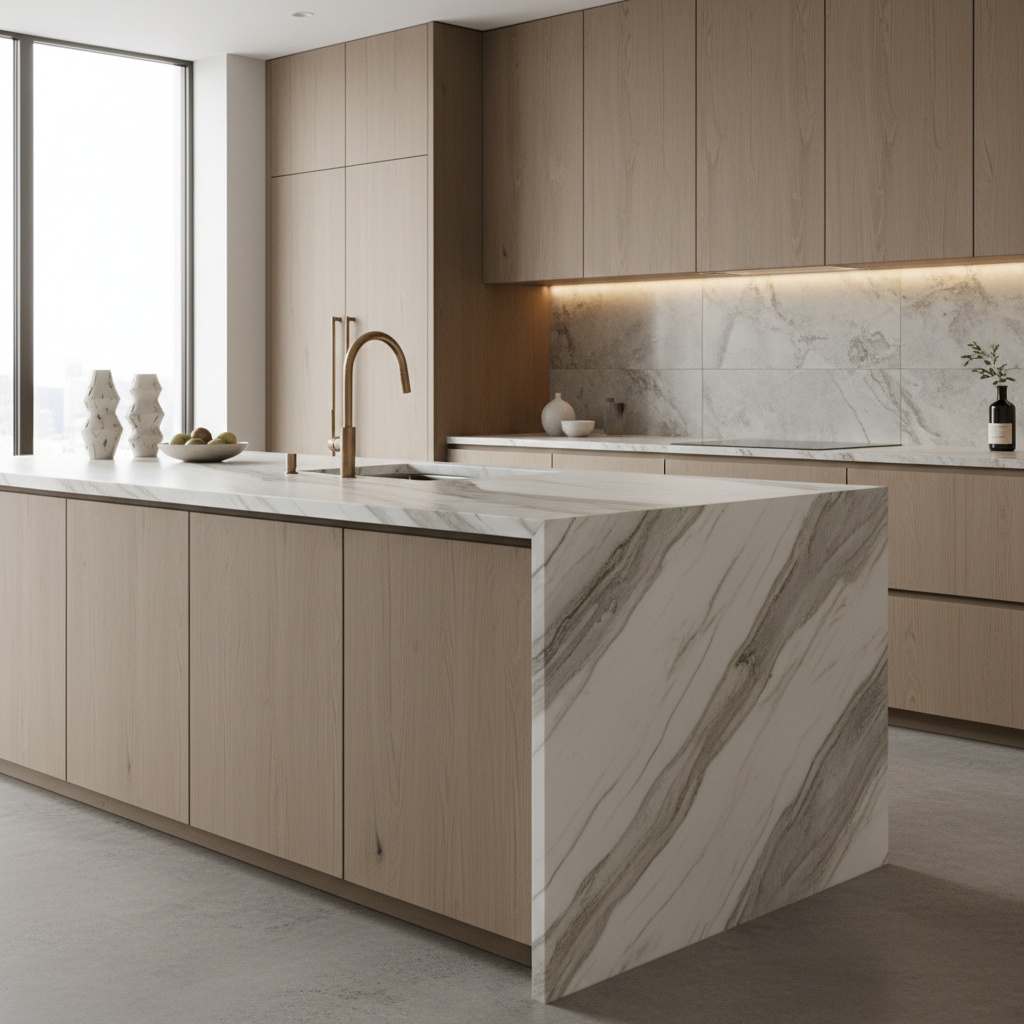
Edge profiles and details matter too. A waterfall edge on an island, a honed (matte) finish instead of high polish, and well-planned seams all affect how the finished kitchen reads. These are the details worth talking through with your fabricator and contractor before the slab is cut, because they are difficult to change later.
Let's Find the Right Surface for Your Kitchen
Choosing a countertop is one of the most satisfying decisions in a kitchen renovation, and one of the most personal. The right material should fit your cooking, your maintenance tolerance, and the look you are after, all at once.
At Elements Kitchen & Bath, we help NYC homeowners weigh these tradeoffs honestly and source the right slab for the way they live, then install it with the precision the material deserves. If you are planning a kitchen renovation and want guidance choosing between quartz, granite, marble, or quartzite, get in touch with our team. Let's design a kitchen built around the surface you will use every single day.